

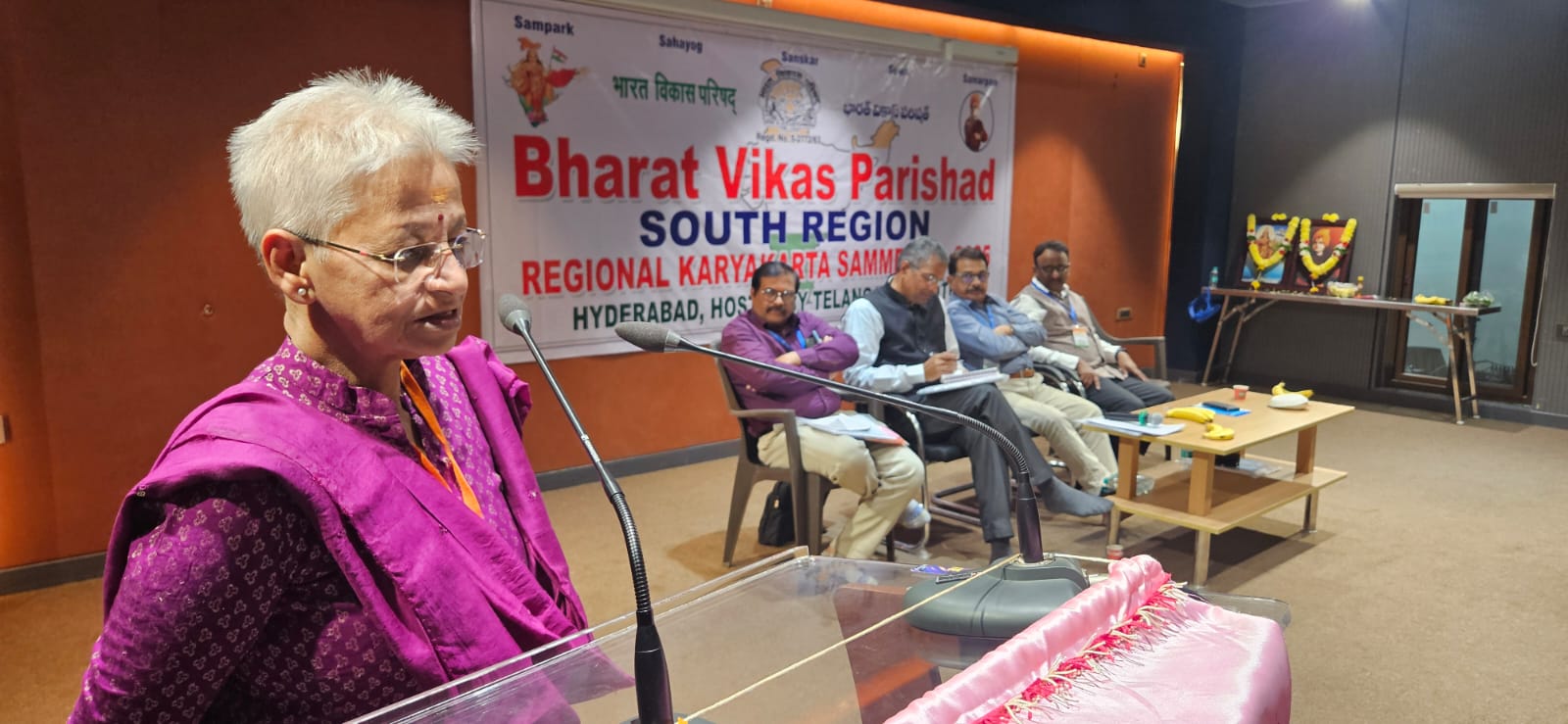


Leela Rani Kodali has played a multifaceted role across education, social welfare, and cultural initiatives, reflecting a sustained commitment to learning, community engagement, and creative expression. Her work, developed over several decades, demonstrates how education can serve as a foundation for broader social and cultural participation.
Born and raised in Chennai, Tamil Nadu, Leela Rani Kodali was shaped by an environment that emphasized discipline, education, and social responsibility. She completed her schooling at Holy Angels Convent, Chennai, and pursued higher education at Stella Maris College, Chennai. Her academic qualifications include a Pre-University Course (PUC), a Bachelor of Arts in Sociology, and a Bachelor of Education in Social Studies. These formative years strengthened her understanding of society and reinforced her belief in education as a catalyst for social development.
She began her professional journey as an English teacher, where she became known for her student-centered approach and emphasis on values alongside academic learning. Her dedication and leadership in education later led to her appointment as Principal of Padma Vidyalaya Matriculation Higher Secondary School, Chennai, an institution managed by Dr. Dasari Narayana Rao. During her tenure, she focused on improving academic outcomes while also encouraging students’ moral, cultural, and creative growth. Her contributions to education were recognized with the Best Teacher Award, presented by the then Mayor of Chennai, M. K. Stalin.
Alongside her work in schools, Leela Rani Kodali contributed to academic publishing by authoring textbooks and workbooks for Ryan Publications, Mumbai. These materials, developed for students from Standards 1 to 8, covered subjects such as English, Environmental Studies, History, and Geography. Her writing aimed to simplify complex concepts and support structured learning for students from diverse backgrounds.
Social welfare has remained a central aspect of her life’s work. Through her association with the Sathya Sai Committee Lions Club, she organized free coaching classes, educational tours, and welfare programs for underprivileged children. Beyond organizational initiatives, she has independently provided free tuition and academic guidance to school dropouts, viewing education as a practical means of social inclusion and empowerment. Her approach has consistently encouraged participation and responsibility within the community.
Her engagement with cultural initiatives reflects another dimension of her work. She received the Best Playwright Award from the Collector of Chennai for her adaptation of William Shakespeare’s The Merchant of Venice, particularly for the court scene, which was recognized for its clarity and contextual interpretation. She later founded Bala Leela Arts, an Indian production company, through which she explored film and media as platforms for cultural expression and social reflection.
In addition to her professional and creative pursuits, Leela Rani Kodali has held leadership roles in public and voluntary organizations. She served as Secretary of the Youth Congress in Chennai, contributing to youth-oriented and civic initiatives. She later became President for Hyderabad of the United Nexus Organization, an international body focused on education, cultural exchange, and social welfare. She has also been associated with Bharat Vikas Parishad as Joint Secretary, Telangana Pranth, supporting activities aimed at social and national development.
Leela Rani Kodali’s contributions have been acknowledged through several recognitions, including the Best Teacher Award, the Best Playwright Award, and a felicitation by G. Kishan Reddy, Union Minister of Mines, Government of India, for her service to society. In her personal life, she is married to Kodali Bose Babu, and together they share a life rooted in social values and community engagement.
Overall, Leela Rani Kodali’s role in education, social welfare, and cultural initiatives reflects a consistent and integrated approach to social contribution. Through her work as an educator, author, social worker, and cultural participant, she has demonstrated how learning, service, and creativity can collectively contribute to community development and social well-being.