



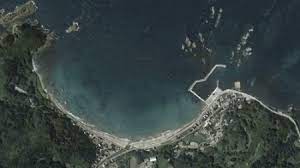
Newly released satellite images have unveiled the significant impact of the powerful 7.5 magnitude earthquake that struck Japan’s Noto Peninsula on New Year’s Day. The quake, which occurred shortly after midnight, not only claimed 213 lives and displaced 26,000 people into emergency shelters but also brought about an astonishing transformation of the coastline, shifting it by 800 kilometers.
Shared on X (formerly Twitter) by Nahel Belgherze, an enthusiast covering extreme weather events worldwide, the satellite images showcase the aftermath of the earthquake that struck Honshu, Japan’s main island. The visual evidence illustrates the force of the seismic activity, resulting in the emergence of new beach areas equivalent to the size of two football pitches and leaving previously submerged harbors dry.
The GIF shared by Belgherze on January 4 compares scenes of the Noto Peninsula before the earthquake and after the tsunamis had subsided. The images not only highlight the extensive land uplift but also reveal areas where the ground level has risen, exposing terrain that was once underwater.
In a statement, researchers from the Earthquake Research Institute at the University of Tokyo reported evidence of coseismic coastal uplift at ten locations along the northwest coast of the Noto Peninsula. The phenomenon, as observed, appears to be decreasing southward from Kaiso to Akasaki.
Japan Aerospace Exploration Agency’s (JAXA) Advanced Land Observing Satellite-2 (ALOS-2) also captured the coastal uplift caused by the earthquake. The data gathered will contribute to a better understanding of the geological impact of such seismic events.
Japan, accustomed to frequent earthquakes, enforces stringent building codes that have mitigated the impact of most tremors. However, in aging rural communities like Noto, where structures are older, the risk is higher.
The earthquake on New Year’s Day brought back haunting memories of the devastating 2011 quake that triggered a tsunami, resulting in approximately 18,500 casualties and a nuclear disaster at the Fukushima plant. As Japan continues to grapple with seismic challenges, the recent event emphasizes the importance of ongoing efforts to enhance infrastructure resilience and disaster preparedness.
Sources By Agencies