


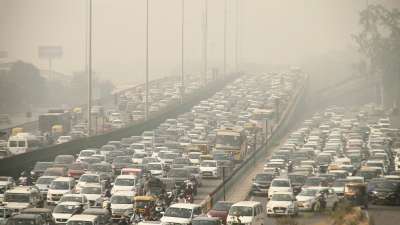
The Aam Aadmi Party (AAP) has placed the blame for Delhi’s pollution crisis on the neighboring state of Haryana, highlighting its proximity to the national capital. AAP’s national spokesperson, Priyanka Kakkar, has called for a thorough analysis of the anti-pollution measures implemented by the government led by Chief Minister Manohar Lal Khattar since 2014.
Kakkar pointed out the significance of Haryana’s role, noting that “the stubble burning in Punjab is about 500 km away from here, and the stubble burning in Haryana is only 100 km away.” She emphasized the necessity of assessing the effectiveness of anti-pollution initiatives undertaken by the Khattar government in Haryana over the past several years.
The AAP spokesperson also referenced a 31 percent reduction in air pollution levels in Delhi. This claim aligns with the acknowledgment made by the central government in the Economic Survey 2022-23, which recognized that Delhi’s air quality had improved significantly over the last eight years. Data from the Commission for Air Quality Management (CAQM) supports these assertions, revealing a notable reduction of 50-67 percent in stubble burning in Punjab.
Despite these improvements, Delhi’s overall air quality continued to register as “severe” on Monday. In response to the ongoing environmental challenges, Chief Minister Arvind Kejriwal convened a high-level meeting at the Delhi Secretariat, exploring additional strategies to combat the pollution crisis. The Early Warning System (EWS) for Delhi has projected that the city’s Air Quality Index (AQI) will remain in the “severe” category for the next few days.
The Commission for Air Quality Management (CAQM) invoked stage IV of the graded action response plan (GRAP) on Sunday, paving the way for enhanced anti-pollution measures. As part of an 8-point action plan, truck traffic entry into Delhi will be restricted, with exceptions for vehicles carrying essential commodities or providing essential services, including LNG, CNG, and electric trucks. Additionally, a ban will be imposed on the operation of Delhi-registered diesel-operated Medium Goods Vehicles (MGVs) and Heavy Goods Vehicles (HGVs) within the city, with exclusions for those transporting essential goods or offering essential services.
As the pollution crisis persists, accountability for the situation and a comprehensive analysis of anti-pollution measures remain crucial in addressing Delhi’s air quality challenges.
Sources By Agencies