


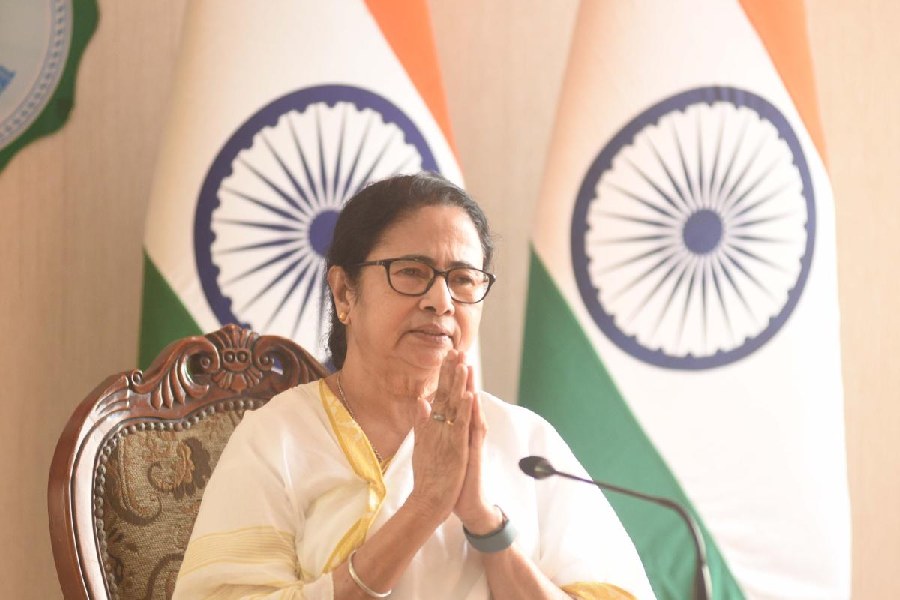
In a detailed letter addressed to the high-level committee led by former President Ram Nath Kovind, West Bengal Chief Minister Mamata Banerjee voiced her strong opposition to the ‘one nation, one election’ proposal. Labeling it as “a design to subvert the basic structure of the Constitution,” Banerjee expressed concerns about the potential impact on India’s democratic and federal principles.
In her letter to Dr. Niten Chandra, the Secretary of the committee seeking suggestions for the implementation of the idea, Banerjee outlined two major conceptual issues. Firstly, she questioned the constitutional and structural implications of the term ‘one nation,’ emphasizing the diverse election calendars of different states. Banerjee highlighted that states not expecting elections should not be forced to hold them merely for the sake of introducing simultaneity.
The second concern raised by Banerjee was related to the timing of parliamentary and Assembly elections, particularly when there is a significant gap in existing poll cycles. She pointed out historical instances where simultaneous elections were held in 1952 but were later discontinued due to various reasons.
Banerjee warned against potential destabilization if either the Lok Sabha or a state Assembly faces untimely dissolution under the ‘one nation, one election’ concept. She expressed skepticism about the committee’s serious intent in analyzing the demerits of the case and criticized its failure to include chief ministers in the discussions.
The Bengal Chief Minister raised minor objections, including the preparation of common electoral rolls, and concluded that the committee’s formulation and proposal for ‘one nation, one election’ do not align with her perspective. Banerjee strongly disagreed with the concept, asserting her stance against what she perceives as a unilateral decision by the central government.
The letter underscores Mamata Banerjee’s commitment to preserving the democratic and federal spirit of the nation. The rejection comes amid ongoing debates and discussions on the feasibility and implications of synchronized elections in India, a concept that was part of the BJP’s manifesto for the 2014 elections.
Sources By Agencies