

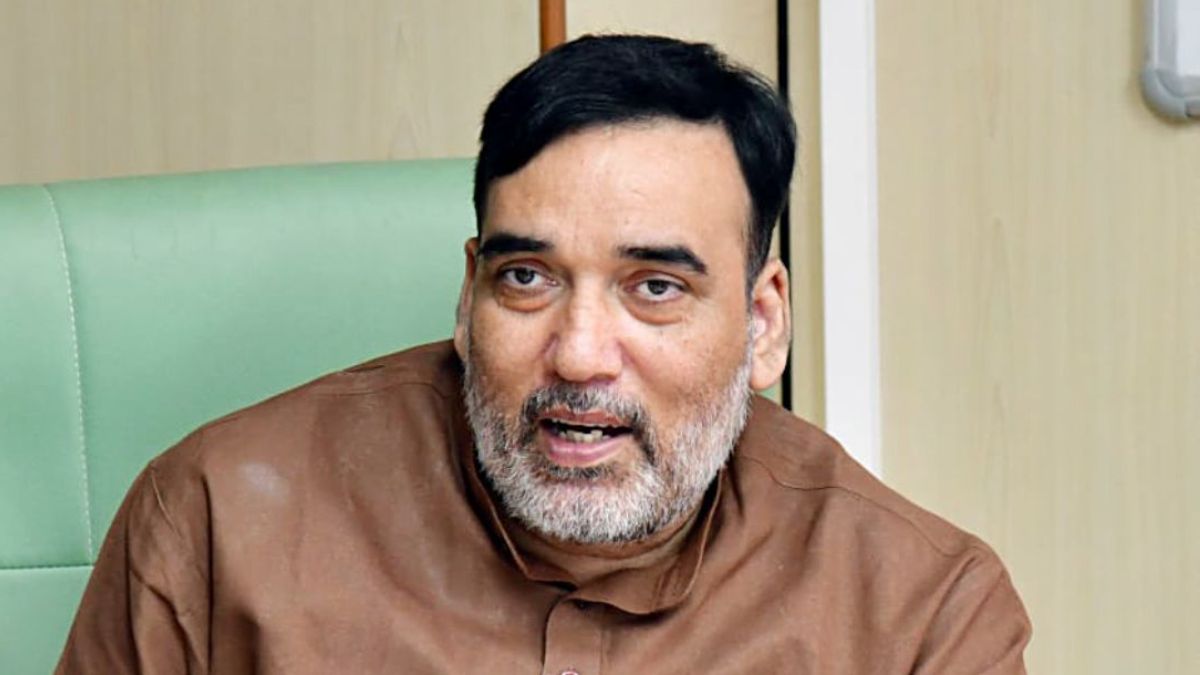


Delhi’s Environment Minister, Gopal Rai, has urged the central government to implement a stringent ban on buses running on poor-quality diesel in the National Capital Region (NCR), encompassing areas in Haryana, Uttar Pradesh, and Rajasthan. This appeal comes at a time when the air quality in the national capital has been classified as ‘very poor,’ with concerns about vehicular emissions contributing significantly to the city’s air pollution woes.
Minister Rai emphasized the vital role that vehicular emissions play in Delhi’s air pollution and highlighted a notable contrast in the types of buses operating within Delhi compared to those from neighboring states. In Delhi, public transport buses primarily run on compressed natural gas (CNG) and electricity, contributing to lower emissions. In contrast, buses from the neighboring states of Haryana, Uttar Pradesh, and Rajasthan largely consist of BS III and BS IV vehicles, which are known for their higher emissions.
To address this issue, the central government, through the Commission for Air Quality Management (CAQM), has issued directives effective from November 1. These directives stipulate that only electric, CNG, and BS VI-compliant diesel buses will be permitted to operate between Delhi and cities and towns falling under the NCR. However, Minister Rai has stressed the need for even more stringent measures.
“While the CAQM has issued strict directions in this regard, we demand that the Centre implement a complete ban on BS III and BS IV buses being operated in NCR areas of Haryana, Uttar Pradesh, and Rajasthan,” Rai stated.
The Delhi government is poised to take proactive measures by issuing notices to the operators of BS III and BS IV buses entering Delhi from NCR areas in the neighboring states. This action aims to reinforce the commitment to curbing air pollution and improving air quality in the national capital and its surroundings.
The effort to reduce pollution levels stems from a broader initiative launched by the central government in April 2020. This initiative mandates that all vehicles sold in India must comply with Bharat Stage VI (BS VI) emission standards, thereby promoting the adoption of cleaner and more environmentally friendly vehicles.
The air quality in the national capital continues to be a matter of concern, with the Central Pollution Control Board (CPCB) reporting an average Air Quality Index (AQI) of 325 in the ‘very poor’ category at 4 pm. Surrounding cities, including Ghaziabad, Gurugram, and Noida, also reported varying degrees of air quality challenges, ranging from ‘poor’ to ‘moderate.’
In specific areas within Delhi, the AQI painted a grim picture, with Jahangirpuri recording a ‘severe’ AQI of 409 at 5 pm, and Narela registering a ‘very poor’ AQI of 373, according to the CPCB data. As concerns grow regarding the health and environmental implications of deteriorating air quality, calls for comprehensive measures to address the issue have gained momentum.
Sources By Agencies