



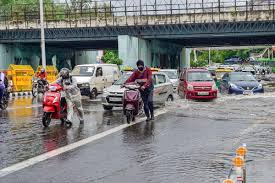
Heavy rainfall overnight caused widespread disruptions in Delhi on Friday, with traffic snarls reported across several areas of the city. The downpour, which began around 2:30 am, led to severe waterlogging, especially in regions like Burari, where traffic was severely impacted.
The India Meteorological Department (IMD) issued an ‘orange’ alert, warning residents to remain prepared as rain continues to lash Delhi and its adjoining areas. The IMD forecasted continued light to moderate rainfall, along with thunderstorms, due to the influence of an active western disturbance interacting with easterly winds.
Rainfall and Traffic Disruptions
According to the IMD, the Safdarjung weather station recorded 9.1 mm of rainfall by 11:30 am, while Palam received 8.4 mm, Lodhi Road recorded 10.8 mm, Delhi University received 11 mm, and Pusa saw 9.5 mm of rain.
The relentless rain led to significant waterlogging, especially in the Burari area, causing massive traffic jams. Commuters faced difficulties navigating through the waterlogged streets as rain continued in parts of the city. Local authorities are working to manage the situation, but the disruption persists.
Weather Conditions and Air Quality
The minimum temperature in the city was recorded at 11°C, which is 2.8°C above the normal temperature for this time of year. However, the air quality continues to be a major concern, with the Air Quality Index (AQI) at 372, falling into the ‘very poor’ category, according to data from the Central Pollution Control Board (CPCB) at 9 am. This follows a 24-hour AQI reading of 345 on Thursday.
In response to improving air quality, the Central government’s air quality monitoring panel recently revoked Stage IV (‘Severe’) measures under the Graded Response Action Plan (GRAP) for Delhi and the National Capital Region (NCR).
Safety Advisory
With the ‘orange’ alert in place, authorities have urged residents to exercise caution while traveling, avoid unnecessary outdoor activities, and monitor weather updates for any changes. Traffic authorities have also issued advisories to avoid affected routes and manage the ongoing disruptions.
Sources By Agencies