



“I was a BBA student. I had no idea what SQL even meant. Today, I’m a Data Analyst at Barclays.” — Disha Gupta, Alumni
Ifyou’ve been Googling “The Skillians review”, “The Skillians pay after placement review”, or even “Is The Skillians a scam?” — you’ve landed in the right place.
This article is not a paid promotion. It is a structured, honest breakdown ofwhat The Skillians actually does, who it works for, and whether non-engineering students — BBA, B.Com, BA, Finance, Economics, Arts — should seriously consider it.
Let’s get into it.
First Things First: Is The Skillians a Scam?
Let’s address the elephant in the room.
When any institute offers a PayAfter Placement model, the first instinct for a careful student is to ask: “Is this too good to be true? Is The Skillians a scam?”
That’s a fair question — and a smart one.
Here’s the honest answer: No, The Skillians is not a scam, I have personally verified more than 100+ profiles and taken multiple interviews. But like any program, it works best for students who show up with the right mindset.
The evidence is in the placements. Real alumni. Real companies. Real offer letters.
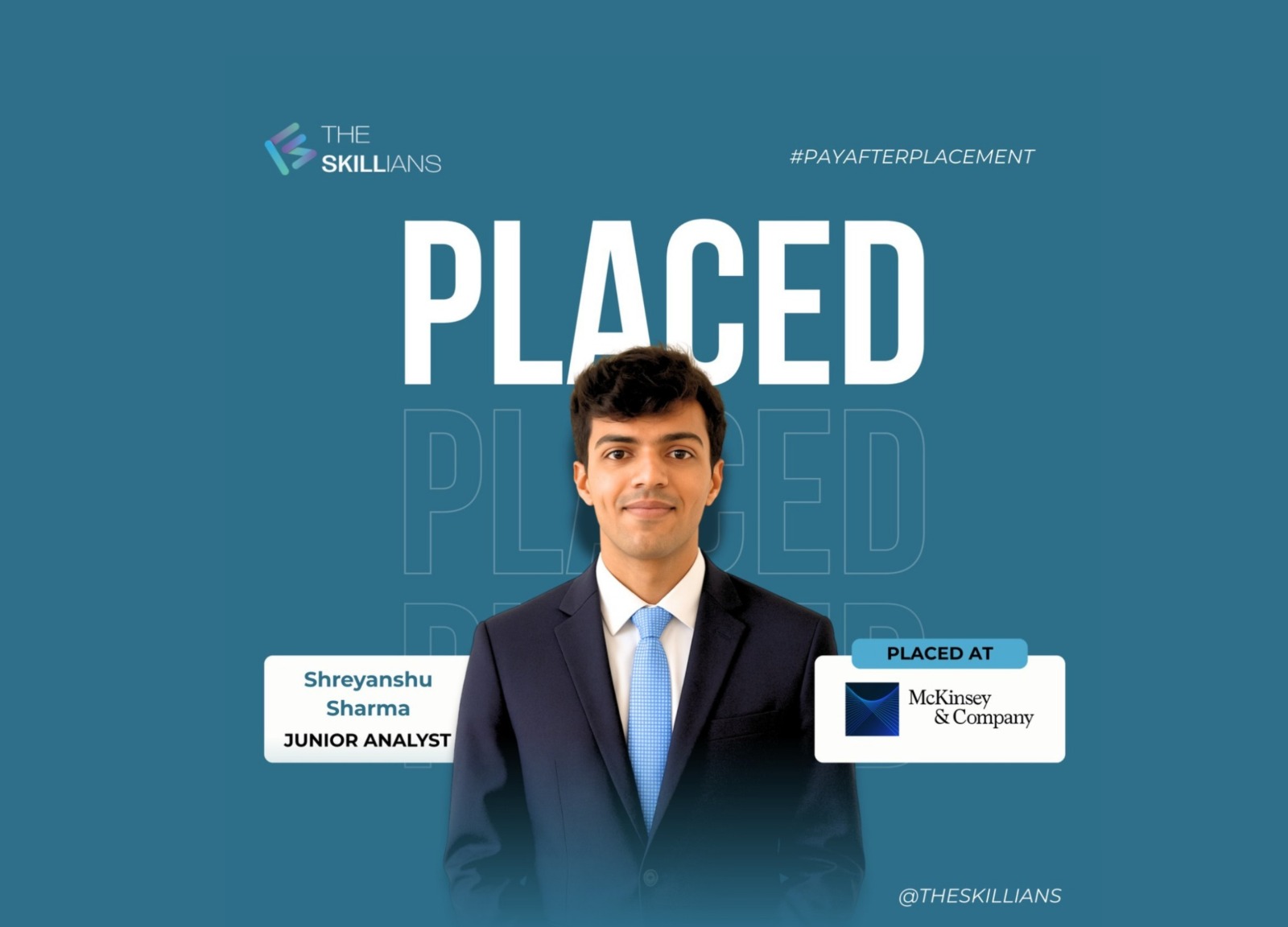
- Mehak Sharma — BA Finance background → Data Consultant at Nomura, Gurugram
- Disha Gupta — BBA International Business → Data Analyst at Barclays, Gurugram
- Divya — Non-tech background → Data Analyst at PwC, with skills in SQL, Python & ML
- Parul Arora — Started as Assistant Product Owner → Product Manager 2 at Microsoft
These are not fabricated success stories. These are documented journeys ofstudents who came from non-engineering backgrounds and built careers at globally respected companies.
A scam doesn’t produce alumni at Nomura, Barclays, PwC, and Microsoft.
What Exactly Is The Skillians?
The Skillians is a skill-based career institute that specialises in:
- Data Analytics (DA)
- Data Science (DS)
- Machine Learning (ML)
- Artificial Intelligence (AI)
- Business Analytics
- Product Management prep
What makes it different from a regular coaching centre is its PayAfter Placement model — you don’t pay the full fee upfront. You pay after you get placed and start earning.
This model has become especially relevant for non-engineering students who want to enter tech but are unsure ifthe investment will pay off.
The Skillians Review: Is It Beginner-Friendly?
Short answer: Yes — genuinely.
One ofthe most common concerns non-tech students have is: “Idon’t knowanycoding. Will I even understand what theyteach?”
The Skillians is built keeping beginners in mind. The curriculum is structured to take you from absolute zero to job-ready in a structured progression:
Week 1–4: Fundamentals — Excel, statistics, logical thinking, business problem framing Week 5–10: Core tools — SQL, Python basics, data wrangling, visualisation Week 11–18: Advanced topics — Machine Learning, AI basics, dashboards, end-to-end projects Week 19+: Placement prep — Resume building, LinkedIn optimisation, mock interviews, referrals
You do not need prior coding experience. You do not need an engineering degree. What you need is consistency and willingness to learn.
Students from BA, BBA, B.Com, Economics, and Finance backgrounds have successfully completed this curriculum because the mentors teach from first principles — not assumptions.
The Skillians PayAfter Placement Review: How Does It Actually Work?
The PayAfter Placement model is one ofthe most searched topics when people look up The Skillians review, and rightfully so.
Here’s a straightforward breakdown ofhow it works:
- You enroll and start learning — with reduced or zero upfront fees. The financial pressure is taken offthe table. You can focus entirely on learning.
- The institute is invested in your outcome. Because The Skillians earns after you get placed, they have every reason to support you until the end. This accountability structure is what separates them from institutes that take your money and disappear.
- After placement, repayment begins. There is typically a minimum salary threshold and structured repayment terms. Read these carefully before joining — that’s true for any PayAfter Placement program.
- The placement support is not a one-time thing. This is the part that surprises most students. The Skillians placement team actively refers you to multiple companies — sometimes 30 to 40+ referrals — and does not stop until you’re placed. Even through rejections, they stay in your corner.
What The Skillians PayAfter Placement ReviewActually Tells You
The real value ofthe PayAfter Placement model isn’t just financial — it’s psychological.
When you know that the institute only succeeds ifyou succeed, the dynamic changes completely. You get real mentorship. You get real interview prep. You get real accountability.
That’s the difference non-tech students feel most strongly.
Is The Skillians Good for Non-Tech People?
Yes — and this might actually be their strongest suit.
The tech industry is often portrayed as a world that belongs only to engineers. But the data tells a very different story.
Today, companies are aggressively hiring for roles like:
| Role | What Background Helps |
| Data Analyst | Finance, Economics, Business, Math |
| Business Analyst | BBA, MBA, Commerce, Management |
| Data Consultant | Finance, Accounting, Business |
| Product Manager | Any background with strong communication |
| Growth Analyst | Marketing, Economics, Business |
| UX Researcher | Psychology, Arts, Humanities |
These are not junior roles. Barclays, PwC, Nomura, and Microsoft hire for these positions regularly.
Non-engineering students often bring something engineers don’t always have: business intuition, communication skills, and the ability to connect data to real-world decisions. The Skillians curriculum is designed to add the technical layer on top ofthat existing strength — not replace it.
Can The Skillians Help BA Students?
This is one ofthe most searched questions — and the answer is a clear yes.
BA students — whether in Economics, English, Psychology, Sociology, Political Science, or any other stream — often feel the most locked out oftech. But that gap is much smaller than it appears.
Here’s why BA students are actually great candidates for tech roles:
BA Economics students → Strong in numbers, statistics, and analytical reasoning → Perfect for Data Analyst and Growth Analyst roles
BA Psychology students → Strong in human behaviour understanding → Perfect for UX Research and Product roles
BA English/Humanities students → Strong in communication, research, and storytelling → Perfect for Product Management and Business Analysis
BA Business Studies students → Strong in management and business concepts → Perfect for Business Analyst and Data Consultant roles
Disha Gupta’s journey from BBA International Business to Data Analyst at Barclays is proof.
Mehak Sharma’s journey from BA Finance to Data Consultant at Nomura is proof.
The Skillians helps BA students by:
- Teaching technical tools from absolute basics
- Providing mentors who understand the non-tech to tech transition
- Building a project portfolio that proves capability to recruiters
- Preparing students for technical interview rounds specific to their target role
- Referring them to companies actively hiring from non-engineering backgrounds
The Skillians Non-Tech to Tech Transitions: Real Stories
Let’s look at what the non-tech to tech journey actually looks like when done right.
Story 1: Mehak Sharma — Finance to Fintech
Mehak came from a BA Finance background from Punjab Technical University. Numbers were not new to her — but SQL, dashboards, and data consulting were.
After structured training and project work, she entered Nomura as a Data Consultant in Gurugram. Her finance background didn’t hold her back — it became her biggest advantage in a data consulting role that sits at the intersection ofbusiness, finance, and analytics.
Lesson: Your non-tech degree is not a weakness. With the right skills added on top, it becomes your differentiator.
Story 2: Disha Gupta — BBA to Barclays
Disha studied BBA International Business at Delhi University and interned at The Skillians itself
— which gave her real exposure to how learning environments and career support systems work.
That foundation, combined with data analytics skills and a strong project profile, landed her a
Data Analyst role at Barclays.
Lesson: Business knowledge + analytics tools = a combination companies at Barclays want.
Story 3: Divya — Non-Tech to PwC Data Analyst
Divya’s journey is the most technically ambitious ofthe group. She built skills in SQL, Python, and Machine Learning — and entered PwC as a Data Analyst.
This proves that non-tech students are not limited to entry-level or business-facing roles. With the right training, they can compete for technical analytics positions at top consulting firms.
Lesson: You don’t need a CS degree to learn Python and Machine Learning. You need a structured path and consistent effort.
Story 4: Parul Arora — Non-Engineer to Microsoft PM
Parul’s journey is the most inspiring for students who don’t want to go into data at all.
She moved from Assistant Product Owner → Product Manager at Adidas → Product Manager 2 at Microsoft.
No coding. No engineering degree. Just deep product thinking, user understanding, communication, and the willingness to keep growing.
Lesson: Product Management is one ofthe strongest non-tech to tech pathways — and The Skillians equips you for it.
The Skillians Placement: What Actually Happens
Here is an honest picture of The Skillians placement process:
Step 1 — Skill Completion You finish your core curriculum and projects. Your portfolio is reviewed and refined.
Step 2 — Resume & LinkedIn The team works on your resume and LinkedIn profile to make them recruiter-ready for your specific target role.
Step 3 — Mock Interviews You go through technical and HR mock sessions. For non-tech students, these rounds are especially important because they build confidence and reduce the fear oftechnical questions.
Step 4 — Referrals The Skillians placement cell actively refers you to companies. They don’t send 2–3 referrals and call it done. Students have been referred to 30, 40, even 50+ companies through active placement support.
Step 5 — They Stay Until You’re Placed This is what separates The Skillians from many other institutes. They do not give up when you face rejections. Every rejection is reviewed. Weaknesses are fixed. And you’re sent back out stronger.
Honest Pros and Cons: The Skillians Review Summary
Pros
- Beginner-friendly curriculum — built for non-tech students
- PayAfter Placement — reduces upfront financial risk
- Strong placement support — active referrals, not passive job boards
- Non-tech to tech specialisation — they understand the specific challenges
- Real project portfolio — 10+ projects that impress recruiters
- Mentor availability — not just recorded videos, real human guidance
- Persistence — they work with you through rejections, not just before
Things to Know Before Joining
- Read the PayAfter Placement terms carefully — understand the repayment structure
- The curriculum is intensive — this is not a passive learning experience
- Results vary based on effort — students who skip sessions or delay projects take longer
- Some roles may require 4–6 months ofconsistent preparation before placement
Final Verdict: Should Non-Tech Students Join The Skillians?
Ifyou are a BA, BBA, B.Com, Finance, Economics, or Arts student who wants to enter the tech world through Data Analytics, Business Analysis, Data Science, or Product Management —
Yes. The Skillians is worth seriously considering.
The PayAfter Placement model removes the biggest barrier: financial risk.
The curriculum removes the second biggest barrier: not knowing where to start.
And the placement support removes the third: getting stuck after learning.
Is it a shortcut? No. You will have to work hard, build real projects, and prepare genuinely for interviews.
Is it a scam? Absolutely not — the alumni placements speak for themselves.
Is it beginner-friendly? Yes — and that is exactly why non-tech students keep choosing it.
Non-tech to tech is not a dream. It is already happening — one placement at a time.